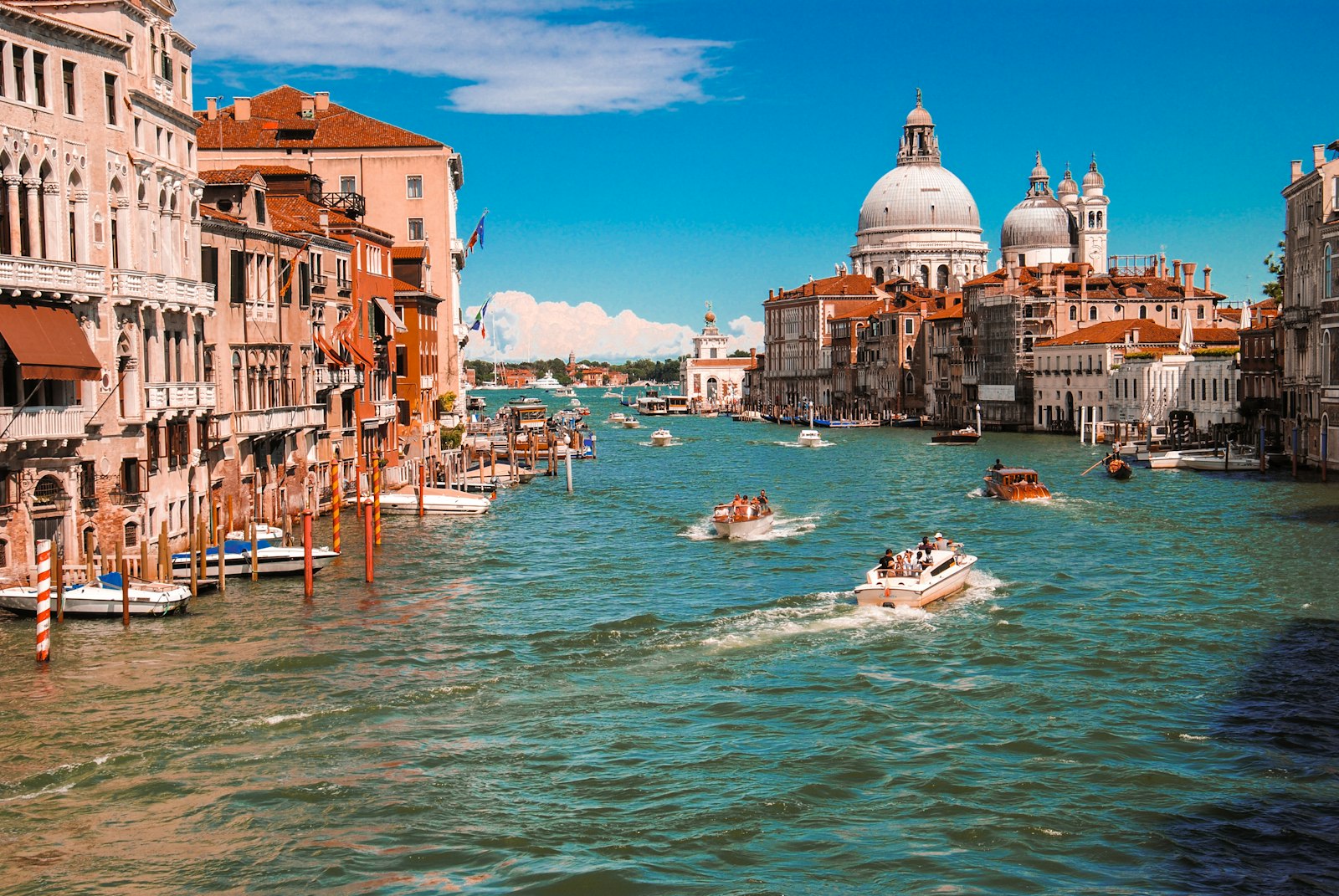
Venice
Venice Regata Storica 2026: Programme, Best Places to Watch and Vaporetto Changes
Venice's Regata Storica returns on 6 September 2026. See the programme, route, best viewing areas and waterbus changes before planning your day.
The mistake on Regata Storica day is arriving beside the Grand Canal at 16:00 and expecting to choose a viewpoint after seeing where the crowds are.
Venice's Regata Storica takes place on Sunday 6 September 2026. The historical procession is scheduled for 15:30, followed by a sequence of rowing races that continues into the early evening. Waterbus services on and around the Grand Canal will be suspended or modi ed for several hours.
This is a day to select one section of the route, arrive early and stay there. It is not a normal Venice sightseeing day with a rowing event added in the middle.
Quick answer
Main date: Sunday 6 September 2026.
Historical procession: scheduled from 15:30.
First youth race: scheduled from 16:00.
Women's mascarete race: scheduled from 17:40.
Gondolini race: scheduled from 18:10.
Main route: San Marco Basin, the Grand Canal, Rialto, the railway-station area and back towards Ca' Foscari.
Grand Canal waterbuses: expected to be suspended from approximately 15:00 to 19:30.
Venice access fee: not payable on 6 September because the published 2026 charging period ended on 27 July.
Event and transport timings can still be adjusted for safety or operational reasons. Check the official programme and ACTV notices again before leaving your accommodation.
Regata Storica 2026 programme
The central event takes place on Sunday, but the official programme includes ceremonies in the preceding days.
Friday 28 August
The programme begins with the Disnar per la Storica, a citywide series of community dinners connected to the regatta.
Thursday 3 September
A water procession for the blessing of the gondolini is scheduled to leave the Rialto area at 17:30. The ceremony follows at Campo della Salute, with the blessing scheduled for 18:00.
Sunday 6 September
15:30: historical and sporting procession.
16:00: regatta for children in maciarele and schie.
16:30: young women's regatta in two-oared mascarete.
16:50: young men's regatta in two-oared pupparini.
17:10: regatta in six-oared caorline.
Later in the programme: the international university boat challenge.
17:40: women's regatta in two-oared mascarete.
18:10: men's regatta in two-oared gondolini.
The gondolini race is the event many spectators wait for, but the historical procession is central to the character of the day. Arriving only for the final race removes much of the context and makes finding a useful space considerably harder.
Where does the Regata Storica take place?
The procession enters from the San Marco Basin and follows the Grand Canal through the centre of Venice. It passes the Rialto area, continues towards the railway station and returns along the canal towards the finish near Ca' Foscari.
The route creates several very different viewing experiences. There is no single correct location. The better choice depends on the part of the event that matters most to you.
Best places to watch the Regata Storica
Ca' Foscari and Dorsoduro: best for the racing finish
The finish area near Ca' Foscari is the strongest choice for travellers primarily interested in the competitive races. Boats arrive after the long return through the Grand Canal, and the crowd reacts to the final positions rather than merely watching the crews pass.
This is also one of the most pressured sections. Arrive well before the historical procession and do not expect to find a front-row canal edge late in the afternoon.
Choose it for: the races, the finish and the strongest sporting atmosphere.
Avoid it if: you dislike dense crowds or need to leave quickly for the railway station.
Rialto and San Polo: best for a central Venice setting
Rialto provides the most recognisably Venetian setting and allows spectators to see the procession and racing boats moving through one of the canal's narrowest and most animated sections.
The disadvantage is movement. The bridge and nearby calli can become congested, and changing sides after the event begins is slow. Choose the San Polo or San Marco side in advance according to the rest of your evening plan.
Choose it for: a central location and the visual drama of boats passing Rialto.
Avoid it if: you are trying to combine the event with several timed attractions.
San Tomà and San Stae: best for a less theatrical canal view
These stops place spectators directly along the Grand Canal without concentrating everyone at the finish or Rialto. Space is still limited, but the day can feel more manageable when the objective is to watch the boats pass rather than secure the most famous backdrop.
Choose them for: a direct canal view and easier access from nearby accommodation.
Avoid them if: you want commentary, a formal grandstand experience or the finish itself.
Santa Lucia and the Ferrovia area: best for rail travellers
The route reaches the railway-station end of the Grand Canal before returning towards Ca' Foscari. Staying near Santa Lucia can work for visitors arriving by train or leaving Venice after the event.
The sporting finish is elsewhere, so this is better for seeing the boats in motion than for following the final result.
Choose it for: simple logistics and accommodation near the station.
Avoid it if: the final gondolini positions are your priority.
San Marco Basin: best for the opening procession
The basin gives the historical procession room to be seen as a complete formation before the boats enter the narrower Grand Canal.
It also sits inside the area affected by afternoon waterbus restrictions. A visitor staying elsewhere should arrive early and expect to walk back through Venice after the procession.
Choose it for: the ceremonial opening and a wider view of the fleet.
Avoid it if: you want to remain for every race without changing position.
Vaporetto changes on 6 September
The official programme warns of ACTV service modifications from approximately 14:00 to 19:30.
Navigation along the Grand Canal is expected to be suspended from approximately 15:00 to 19:30. Services in the San Marco Basin, from the Vallaresso area towards Giardini, are expected to be affected from approximately 14:30 to 19:00.
These closures have three practical consequences:
Do not rely on a Grand Canal vaporetto to reach your viewpoint shortly before 15:30. Do not plan to cross Venice by boat between two timed reservations during the event. Choose a viewing point on the same side of the Grand Canal as your accommodation or evening restaurant whenever possible.
Walking routes remain available, but bridges and narrow streets around the principal viewing areas can become congested.
Is the Venice access fee required?
No access fee is scheduled for Sunday 6 September 2026. Venice's published 2026 charging period ended on 27 July, so day visitors do not need to pay the fee or request an exemption solely to enter the city for the Regata Storica.
This does not remove ordinary booking requirements for attractions, transport or accommodation. It also does not mean Venice will be quiet.
The Venice Film Festival overlaps with the regatta
The 83rd Venice International Film Festival runs at the Lido from 2 to 12 September 2026. The Regata Storica therefore falls in the middle of the festival period.
The overlap is likely to place additional pressure on accommodation and transport connected with the Lido. This is an inference from the two official calendars, not a prediction that every Lido service will be disrupted.
Avoid building a tight plan that moves from a late-afternoon film-festival event to a central Grand Canal viewpoint. The waterbus changes and city-centre crowds make that combination fragile.
How early should you arrive?
For Ca' Foscari or Rialto, arrive at least 90 minutes before the part of the programme you most want to see. Earlier is better for a front canal position.
For San Tomà, San Stae or the station area, arriving before the 15:30 procession should be sufficient for most visitors, but canal-edge space cannot be guaranteed.
Bring water, sun protection and only what you are comfortable carrying for several hours. Leaving a position for a café or toilet can mean losing it.
A sensible Regata Storica day
Visit one booked attraction in the morning. Have lunch close to your chosen side of the Grand Canal. Reach the viewing area between 14:00 and 14:30. Watch the procession and the races that matter most to you. Walk to dinner rather than depending on the immediate restoration of normal vaporetto services.
Do not attempt San Marco, Murano, the Lido and the Regata Storica in one day. The event deserves a simpler itinerary.
Related guides
Planning a trip like this?
Send us your brief and we will help you get the bases, timing and route right.
• More from the Magazine
 Italy Travel NewsPompeii Winter Hours 2026: Last Entry at 15:30, Herculaneum and the New TrainsPompeii winter hours run from 15 October 2026: last entry at 15:30, closing at 17:00. Herculaneum, the tickets, the free Sunday and the new train times.
 Italian LakesLake Garda in Winter 2026-27: Which Boats Still Run, Christmas Markets and Where to StayLake Garda in winter: passenger boats stop on 2 November 2026 and only the Torri to Maderno ferry runs. The Christmas markets, the buses and the best bases.
 Italy Travel NewsNaples Airport Closure in November 2026: How to Reach Naples, Capri and the Amalfi CoastThe Naples airport closure covers November 2026. Which flights move to Salerno, how the Rome rail route works and which November timetables are still missing.