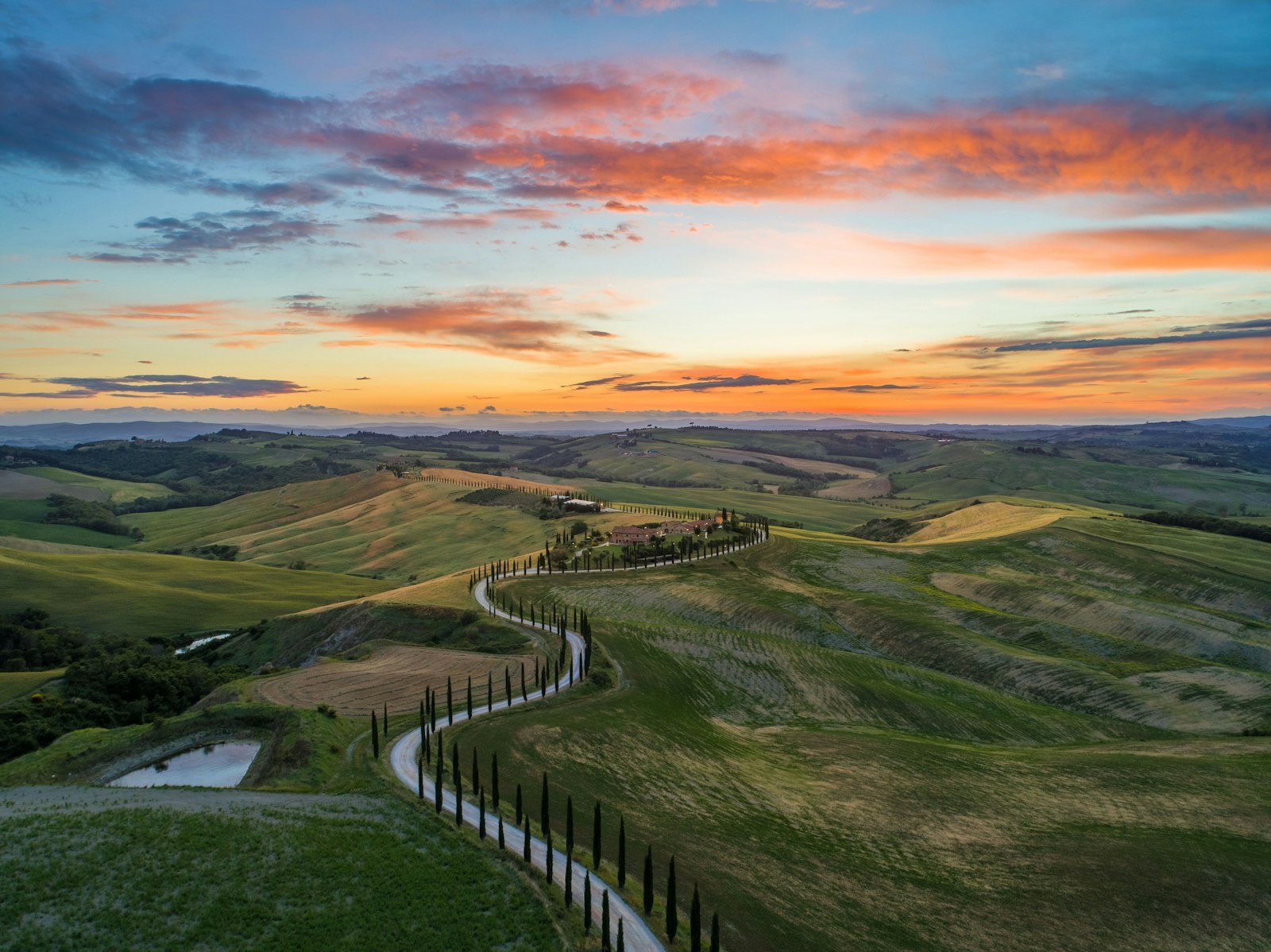
Tuscany
Tuscany Without a Car: Where to Stay, How to Move and What to Avoid
You can visit Tuscany without a car if you choose the right base. See where trains and buses work, where they fail and which towns to stay in.
Tuscany's no-car problem is not the journey between Florence and Lucca. It is the final ten or twenty kilometres between a station, a hill town, a vineyard and a rural property.
A car-free Tuscany holiday works when the itinerary is built around rail-connected cities and a small number of planned bus journeys. It fails when the accommodation is a remote villa and the traveller expects to visit three villages and two wineries in one day.
Quick answer
Yes, Tuscany can be visited without a car. The best bases are Florence, Lucca, Arezzo, Siena and Viareggio.
Florence is the strongest overall base. Lucca works for a slower trip with simple rail journeys. Arezzo is useful for eastern Tuscany and Cortona. Siena gives the best historic atmosphere but depends more heavily on buses. Viareggio works for the coast, Pisa and Lucca.
A car remains the better option for the Val d'Orcia, rural Chianti, remote agriturismi, winery-hopping and a villa holiday.
The Tuscany mistake most car-free travellers make
The mistake is choosing accommodation first and transport second.
A property may describe itself as being "near Siena" while sitting several kilometres from the nearest useful bus stop. A farmhouse may have a railway station in the same municipality but no practical way to cover the final road with luggage.
For a no-car trip, the accommodation should be:
within walking distance of a railway station or central bus terminal; inside a town with restaurants and evening life; served by transport on Sundays and public holidays; connected to the places that matter to your itinerary; reachable without depending on a pre-booked taxi every morning and evening.
1. Florence: the best overall base without a car
Florence is the most effective no-car base because its railway stations connect with Pisa, Lucca, Arezzo, Prato, Pistoia, Bologna and other Tuscan cities. It also has direct bus links towards Siena.
Stay within walking distance of Santa Maria Novella or on a straightforward tram route. A cheaper room far outside the centre can erase its saving through daily transfers and lost time.
Trips that work from Florence
Pisa: a simple rail day trip.
Lucca: reachable by train, although spending one or two nights is better for a slower itinerary.
Arezzo: a direct rail journey on the principal Florence to Rome corridor.
Pistoia: an easy rail option for a smaller-city day.
Siena: usually more practical by direct regional bus than by train.
The 131R regional bus route links Florence, Poggibonsi and Siena. Current diversions and stop changes should be checked on the Autolinee Toscane website before travel.
Best for: a first Tuscany trip, short holidays and travellers continuing around Italy by train.
What to avoid: using Florence as a base for repeated two-hour bus journeys into remote countryside.
2. Lucca: the best slower rail-based base
Lucca works for travellers who want a smaller Tuscan city without abandoning useful train connections.
The station sits just outside the historic walls, making it possible to arrive with luggage and walk to many central hotels and apartments. Trains connect Lucca with Pisa, Viareggio and Florence, although some journeys require a change or take longer than the map suggests.
Trips that work from Lucca
Pisa: the simplest excursion.
Viareggio: useful for a coast day or onward rail travel.
Florence: possible as a day trip, but the journey should be checked before choosing Lucca as a commuter base.
Pistoia: feasible by rail, often through the regional network towards Florence.
Lucca is not the right base for the Val d'Orcia or southern Tuscany. Its strength is the north-western part of the region.
Best for: couples, second-time visitors and travellers combining a walled city with Pisa and the coast.
What to avoid: expecting Lucca to function as a base for every famous Tuscan village.
3. Arezzo: the best base for eastern Tuscany
Arezzo is one of the most underused no-car bases in Tuscany. It sits on the principal rail line between Florence and Rome and has a historic centre that works as a destination rather than merely a transport hub.
It is particularly useful for Cortona. Trenitalia's regional information directs travellers to Terontola-Cortona or Camucia- Cortona stations, followed by a connecting bus towards Cortona's elevated centre.
The important detail is the final climb. Arriving at a station with "Cortona" in its name does not mean stepping directly into the historic town.
Trips that work from Arezzo
Florence: direct by train.
Cortona: train followed by bus.
Chiusi: useful as an onward rail point for southern Tuscany and Umbria.
Perugia: possible as part of a wider central-Italy rail itinerary, subject to the chosen service.
Best for: travellers who have already seen Florence or want a quieter regional base.
What to avoid: treating Arezzo as a direct gateway to every Val d'Orcia village.
4. Siena: the best atmosphere, but not the easiest transport base
Siena is one of the most rewarding places to stay in Tuscany, particularly after day visitors leave. It is less efficient than Florence as a transport hub.
The railway station is outside and below the historic centre. Buses often provide the more useful link to Florence and to towns on the Poggibonsi corridor.
San Gimignano can be reached without a car by travelling to Poggibonsi and continuing by bus. Trenitalia also promotes a San Gimignano Link combining the railway connection to Poggibonsi with the onward bus.
Trips that can work from Siena
Florence: direct regional bus.
San Gimignano: bus via Poggibonsi.
Monteriggioni: possible by bus, but the return timetable needs to be checked carefully.
Southern Tuscany: possible on selected routes, but not as a spontaneous multi-village day.
Siena is better used as a two or three-night base than as a place from which to chase a different hill town every morning.
Best for: atmosphere, evening dining and travellers willing to organise bus times.
What to avoid: arriving with heavy luggage and no plan for the station-to-centre transfer.
5. Viareggio: the best coast and rail combination
Viareggio is not the Tuscany shown in vineyard photographs, but it is one of the region's most functional no-car bases.
Its station connects with Pisa, Lucca, Florence and the Ligurian coast corridor. The town itself provides accommodation, restaurants and access to the seafront without requiring a rural taxi.
This is a useful choice for a September itinerary combining cities and the coast, particularly when the traveller does not need a secluded beach.
Trips that work from Viareggio
Lucca: a straightforward rail excursion.
Pisa: simple by train.
Florence: possible by regional rail, with the exact service checked in advance.
La Spezia and Liguria: useful for an onward journey rather than a rushed daily commute.
Best for: a mixed city-and-coast itinerary.
What to avoid: choosing Viareggio when the real objective is southern Tuscany.
Can you visit San Gimignano without a car?
Yes. The usual public-transport logic is train or bus to Poggibonsi, followed by the local bus to San Gimignano.
This works for a planned visit. It is less suitable when combined with several other villages on the same day. Missing one connection can consume much of the afternoon.
Check both the outward and return journey before leaving. Sunday and holiday schedules may differ from weekday services.
Can you visit Cortona without a car?
Yes, but Cortona's railway stations are below the historic centre.
Use Terontola-Cortona or Camucia-Cortona and continue by bus or taxi. Trenitalia's Cortona Link information sets out the train-and-bus logic.
Cortona works well as a day trip from Arezzo or Florence. Staying overnight is better when the traveller wants the town after the daytime visitors leave.
Can you visit Montepulciano without a car?
It is possible, but it requires more planning than Cortona or San Gimignano.
Trenitalia's regional information directs travellers through Montepulciano station or Chiusi-Chianciano Terme, followed by the appropriate bus connection. The railway station called Montepulciano is not in the historic hill town.
A single Montepulciano visit can work. A no-car loop involving Montepulciano, Pienza, Montalcino and several wineries is not a sensible day plan.
Where a car is still the better choice
The Val d'Orcia
Pienza, Montalcino, Bagno Vignoni, San Quirico d'Orcia and rural viewpoints are spread across a landscape designed around roads rather than a dense public- transport network.
Buses exist, but they are not organised as a hop-on sightseeing circuit. A car or pre-booked driver transforms the trip.
Rural Chianti
Some towns can be reached by bus from Florence or Siena. The difficult part is moving between a village, winery, restaurant and countryside accommodation without repeatedly returning to the same transport corridor.
Remote agriturismi and villas
A villa described as peaceful or secluded is unlikely to sit beside a frequent bus stop. Grocery shopping, dinners and check-in become transport problems before sightseeing has even begun.
Holiday.it's Tuscany villa guide should be treated as a separate trip type. A rural villa holiday normally requires a car.
Winery-hopping
Public transport is not a responsible solution for a day involving several rural wine estates. Book a driver or an organised small-group experience from a city base.
The best no-car Tuscany itinerary
Seven nights
Four nights in Florence: Florence itself, plus Pisa or Arezzo and one planned countryside excursion.
Three nights in Siena or Lucca: choose Siena for medieval atmosphere and San Gimignano, or Lucca for easier rail connections to Pisa and the coast.
This structure is more efficient than changing hotels every night. It also protects the trip if a bus is delayed or the weather changes.
Ten nights
Four nights in Florence.
Two nights in Arezzo.
Two nights in Siena.
Two nights in Lucca or Viareggio.
Travellers continuing around the country can adapt Holiday.it's 10-day Italy itinerary rather than forcing every Tuscan destination into one regional week.
How to make the trip easier
Download the Trenitalia and Autolinee Toscane apps before arrival. Check Sunday and public-holiday timetables separately. Allow at least 20 to 30 minutes for a train-to- bus connection. Travel with luggage that can be carried up steps and over uneven streets. Choose central accommodation, even when it costs slightly more. Book one driver-led countryside day rather than attempting several weak bus excursions. Keep a city day available for poor weather or transport disruption.
Related guides
Planning a trip like this?
Send us your brief and we will help you get the bases, timing and route right.
• More from the Magazine
 Italy Travel NewsPompeii Winter Hours 2026: Last Entry at 15:30, Herculaneum and the New TrainsPompeii winter hours run from 15 October 2026: last entry at 15:30, closing at 17:00. Herculaneum, the tickets, the free Sunday and the new train times.
 Italian LakesLake Garda in Winter 2026-27: Which Boats Still Run, Christmas Markets and Where to StayLake Garda in winter: passenger boats stop on 2 November 2026 and only the Torri to Maderno ferry runs. The Christmas markets, the buses and the best bases.
 Italy Travel NewsNaples Airport Closure in November 2026: How to Reach Naples, Capri and the Amalfi CoastThe Naples airport closure covers November 2026. Which flights move to Salerno, how the Rome rail route works and which November timetables are still missing.