Italian Lakes
Lake Como vs Lake Garda: Which Italian Lake Should You Choose?
Lake Como or Lake Garda? Compare atmosphere, transport, beaches, families, couples, costs and car-free travel before choosing the right Italian lake.
Lake Como is the better short lake trip. Lake Garda is the better complete lake holiday.
That distinction is more useful than asking which lake is more beautiful. Como concentrates famous towns, steep scenery and ferry journeys into a relatively compact central area. Garda is much larger and supports several different holidays at once, including beaches, family attractions, cycling, mountain scenery and long stays.
Quick answer
Choose Lake Como for two to four nights, couples, a first Italian-lake trip, a Milan side trip and easier car-free village-hopping.
Choose Lake Garda for four to seven nights, families, swimming, active days, a wider range of accommodation and a road trip.
Without a car: Lake Como is generally easier, particularly from Varenna or Como town.
With children: Lake Garda usually provides more space and a broader range of activities.
For a honeymoon: Lake Como gives the more concentrated romantic experience.
For a full summer holiday: Lake Garda has more variety and a larger choice of bases.
The real difference between Lake Como and Lake Garda
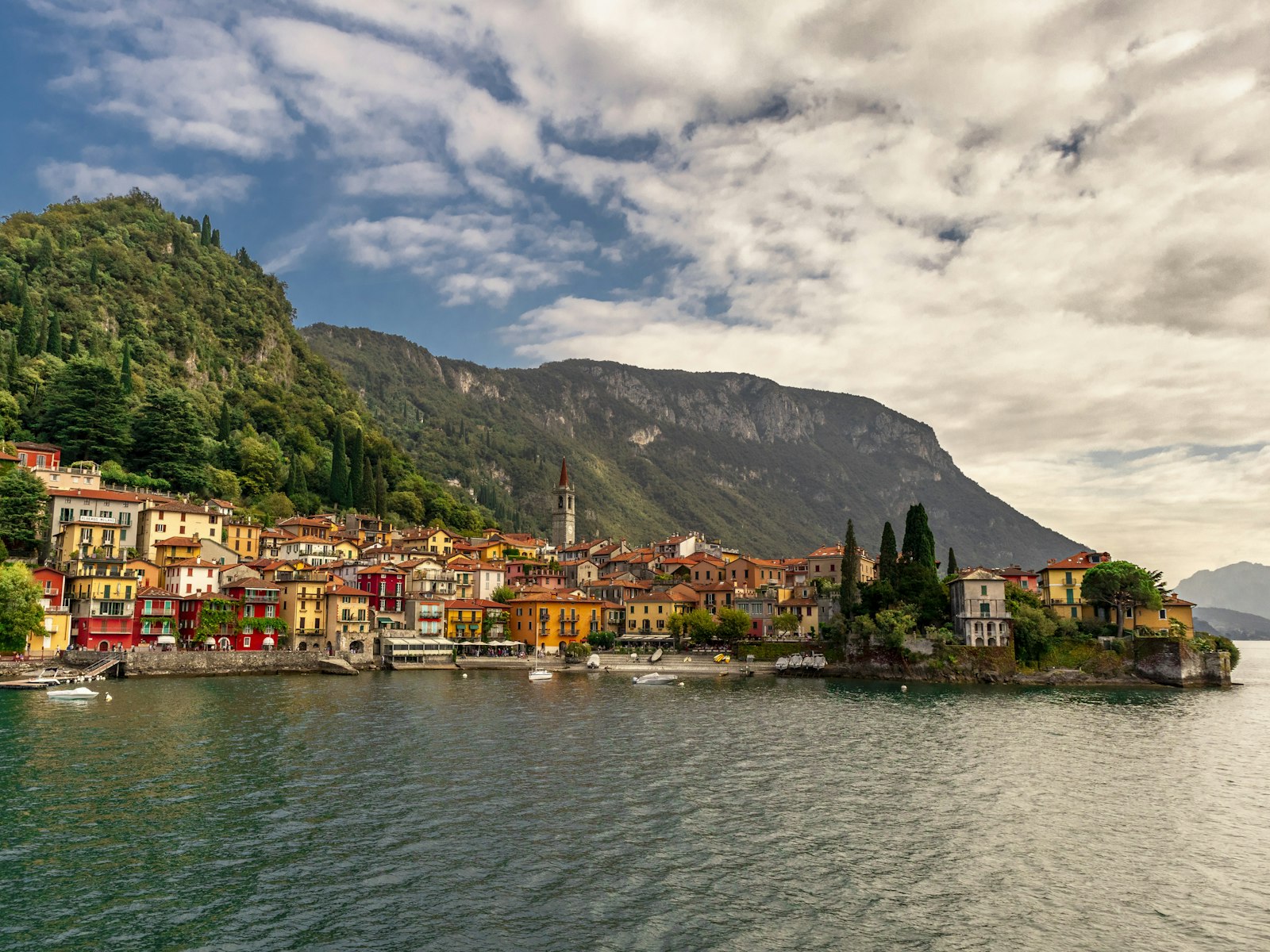
Lake Como is narrow, steep-sided and visually concentrated. Much of a first visit revolves around the central-lake triangle of Varenna, Bellagio and Menaggio, with Como town acting as the southern transport gateway.
Lake Garda is broader and more geographically varied. The southern shore connects well with Verona, Milan and Venice by rail. The eastern shore has a continuous sequence of towns and transport links. The northern lake feels more alpine and active.
This scale is Garda's advantage and its complication. A traveller cannot choose "Lake Garda" as a base. They must choose Peschiera, Desenzano, Bardolino, Garda, Malcesine, Riva or another town according to the trip.
Which lake is easier to reach?
Lake Como
Lake Como is particularly easy from Milan. Trenord publishes direct Milan to Varenna services taking approximately 64 minutes, with around hourly connections on the current schedule. Varenna then connects by ferry with Bellagio and Menaggio.
Como town is also accessible by rail from Milan, but it sits at the southern end of the lake. It is a strong base for transport and city facilities, not the fastest base for repeated central-lake village visits.
Lake Garda
Peschiera del Garda and Desenzano del Garda sit on the principal railway line linking Milan, Brescia, Verona and Venice. They are the easiest Garda bases for travellers arriving by train.
Trenitalia's Garda Link extends the public-transport network from Verona Porta Nuova towards towns including Lazise, Bardolino, Garda, Torri del Benaco, Brenzone and Malcesine through combined train-and-bus travel.
Verdict: Como is easier for a short trip from Milan. Garda is easier to insert into a wider northern-Italy route between Milan, Verona and Venice.
Which lake is better without a car?
Lake Como wins, provided the right base is chosen.
Varenna has direct rail access from Milan and ferry links across the central lake. Como town has rail links and a broad range of services. Bellagio and Menaggio are accessible by ferry and bus, although neither has a railway station.
Navigazione Laghi's 2026 Lake Como timetable includes services on the Como to Colico corridor, Bellagio to Lecco and the central- lake ferry network linking Bellagio, Cadenabbia, Varenna and Menaggio. The main summer schedule is published through 4 October 2026.
Lake Garda can also work without a car, especially from Peschiera or Desenzano. The difficulty appears when the traveller tries to combine the south, east shore and mountainous north in a short stay.
Garda's 2026 passenger-boat timetable runs through 4 October and covers the main Desenzano, Peschiera and Riva corridor. A separate vehicle ferry connects Maderno and Torri del Benaco.
The lake is large. A route that looks short on a map can consume a significant part of the day by ferry or bus.
For the detailed Como decision, read Lake Como Without a Car: Which Town Should You Stay In?
Which lake has better towns?
Lake Como towns
Varenna: the best car-free balance of rail, ferry access and atmosphere.
Bellagio: the iconic central-lake base, but dependent on ferries and road transfers.
Menaggio: a practical western-shore base with ferry access and a more spacious centre.
Como: best for transport, restaurants and a city atmosphere.
Como's best-known towns are concentrated enough to visit in one or two ferry days. This makes the lake satisfying on a short itinerary.
Lake Garda towns
Peschiera del Garda: best for rail access and family logistics.
Desenzano del Garda: best for transport, restaurants and a more urban evening.
Bardolino and Garda: useful east-shore bases for a relaxed lake holiday.
Malcesine: best for the combination of lake and mountain scenery.
Riva del Garda: best for active travel, walking, cycling and the northern landscape.
Garda has more towns that work as week-long bases. The choice therefore requires more preparation but provides more variety.
Which lake is better for beaches and swimming?
Lake Garda is the stronger choice.
Its wider shores provide more places where swimming, sunbathing and waterside days can form a substantial part of the holiday. The southern and eastern areas are particularly useful for travellers who want easy access to the water without organising every day around a ferry.
Lake Como has swimming areas and lidos, but many visitors choose it primarily for scenery, villas, gardens, towns and boat journeys. Access to the water can feel more fragmented, particularly in steep central-lake villages.
Verdict: Garda for a swim- first holiday. Como for scenery with occasional swimming.
Which lake is better for families?
Lake Garda is usually the better family choice.
The lake supports longer stays, road access, beaches, cycling, boat trips and a broad range of attractions around its southern area. Peschiera and Desenzano simplify railway arrivals, while several east- shore towns work well for apartment-based holidays.
Lake Como can suit families, particularly for three or four nights in Varenna, Menaggio or Como. The drawbacks are steep streets, ferry queues, compact accommodation and the need to plan each transfer more carefully.
Navigazione Laghi warns that queues can occur during busy periods and that boarding may not be possible on the first chosen departure. This is particularly relevant for families travelling with pushchairs or xed restaurant reservations.
Verdict: Garda for a full family holiday. Como for a shorter family addition to Milan.
Which lake is better for couples?
Lake Como gives the more concentrated romantic trip.
A three-night stay can include a ferry day around Varenna, Bellagio and Menaggio, a garden or villa visit, and an evening in the base town without requiring a long driving itinerary.
Lake Garda is better for couples who want activity and variety rather than a short ceremonial escape. Malcesine and Riva work for mountain-and-lake days. Bardolino and Garda suit a slower east-shore stay. Desenzano provides more evening movement.
Verdict: Como for a honeymoon or anniversary stop. Garda for an active week together.
Which lake is better for food and evenings?
Como town and Desenzano offer the broadest urban choice on their respective lakes.
Bellagio and Varenna have attractive evening settings, but their centres are smaller and strongly shaped by visitor demand. Menaggio provides a useful middle ground.
On Garda, Desenzano has a larger evening scene, while Bardolino and Garda provide a relaxed promenade-based rhythm. Riva feels more active and northern. A car expands the restaurant choice substantially, but it also creates parking and alcohol considerations.
Verdict: no universal winner. Choose Como town or Desenzano when restaurant variety and evening movement matter more than the postcard view from the hotel.
Which lake is better for active holidays?
Lake Garda wins clearly.
The north around Riva and Torbole is associated with walking, cycling, sailing and other outdoor activities. Malcesine combines lake access with the mountain landscape. The lake's scale supports a week in which each day has a different purpose.
Lake Como has walking and cycling opportunities, but the standard first trip is more likely to centre on ferries, towns, gardens and scenic viewpoints.
Verdict: Garda for sport and movement. Como for a slower scenic itinerary.
Which lake is more expensive?
Prices vary by town, date and accommodation type, but Lake Garda usually provides a wider range of practical mid-market bases.
Lake Como's central headline towns have limited space and strong international demand. A traveller insisting on a lake-view room in Bellagio or Varenna may face a very different budget from someone staying near the railway station in Como town.
Garda also has expensive waterfront properties, but its greater size and accommodation supply make it easier to change town without abandoning the lake.
Verdict: Garda normally gives more room to adjust the budget. Como can still be managed sensibly by choosing Como town, Lecco or a less pressured base.
Do you need a car?
Lake Como
A car is often unnecessary and can become a burden around the central lake. Roads are narrow, parking is limited and ferry travel is part of the experience.
Choose Varenna for the simplest train-and-ferry combination. Choose Como town when rail access and urban services matter most.
Lake Garda
A car is not essential for Peschiera, Desenzano or a carefully planned east-shore trip. It becomes useful for a longer stay involving several shores, rural accommodation or places away from the main transport corridor.
Verdict: Como is better car-free. Garda benefits more from having a car.
How many nights should you spend?
Lake Como
Two nights: enough for one base and one central-lake day.
Three or four nights: the best first-trip length.
Five nights or more: worthwhile when including walking, gardens and slower days, but not necessary for a standard northern-Italy itinerary.
Lake Garda
Two nights: too short unless staying in one southern rail-connected town.
Four nights: enough for one shore and one longer excursion.
Five to seven nights: the better length for a family or active holiday.
Which lake is better in September?
Both lakes work well in September, but for different reasons.
Lake Como suits a short early-autumn trip combining Milan, ferry journeys and gardens. Lake Garda retains the stronger holiday structure for swimming and outdoor activity, particularly in the first half of the month.
The main 2026 seasonal ferry timetables for both lakes currently run through 4 October. Travellers visiting after that date should check the reduced autumn schedules before selecting a base that depends on boat connections.
Choose Lake Como if
you have two to four nights; you are arriving from Milan; you do not want to rent a car; you want the classic first Italian-lake experience; the trip is for a couple or anniversary; ferries, villas and compact villages matter more than beaches.
Choose Lake Garda if
you have four to seven nights; you are travelling with children; swimming and outdoor activities are central; you want to combine the lake with Verona or Venice; you prefer a wider choice of bases and accommodation; you are comfortable using a car or planning longer bus and ferry journeys.
Related guides
Lake Como Without a Car: Which Town Should You Stay In?
Planning a trip like this?
Send us your brief and we will help you get the bases, timing and route right.
• More from the Magazine
 Italy Travel NewsPompeii Winter Hours 2026: Last Entry at 15:30, Herculaneum and the New TrainsPompeii winter hours run from 15 October 2026: last entry at 15:30, closing at 17:00. Herculaneum, the tickets, the free Sunday and the new train times.
 Italian LakesLake Garda in Winter 2026-27: Which Boats Still Run, Christmas Markets and Where to StayLake Garda in winter: passenger boats stop on 2 November 2026 and only the Torri to Maderno ferry runs. The Christmas markets, the buses and the best bases.
 Italy Travel NewsNaples Airport Closure in November 2026: How to Reach Naples, Capri and the Amalfi CoastThe Naples airport closure covers November 2026. Which flights move to Salerno, how the Rome rail route works and which November timetables are still missing.