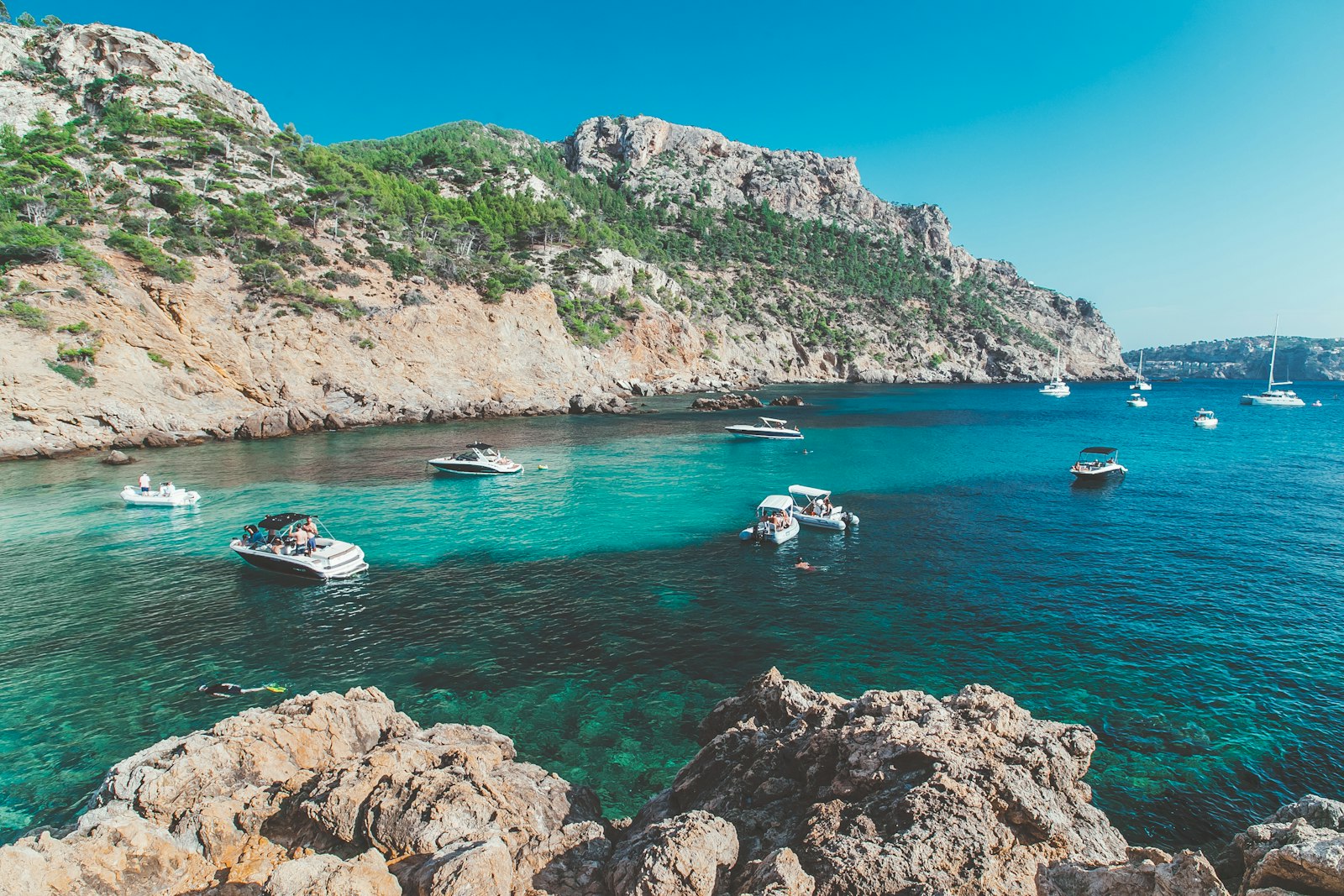
Mallorca
Mallorca Without a Car: Where to Stay, How to Move and What to Avoid
Can you visit Mallorca without a car? Yes, if you choose the right base. Here is where to stay, how to use buses, trains and ferries, and what not to plan.
Yes, you can visit Mallorca without a car.
But not every Mallorca trip works without one.
That is the first thing to understand. Mallorca has better public transport than many visitors expect, especially between Palma, the airport, main resorts, inland towns and some beach areas. But the island is still an island of coves, mountain roads, rural fincas, small villages and beaches that can look close on a map and feel awkward without wheels.
The question is not:
Can I do Mallorca without a car?
The better question is:
Which version of Mallorca works without a car?
A Palma city stay works beautifully. A Sóller and Port de Sóller stay can work very well. Alcúdia and Port de Pollença can work if you choose carefully. A remote finca in the Tramuntana usually does not. Cala d'Or can work for beach-and-resort rhythm, but not for exploring the whole island.
Here is the Holiday.it answer.
Quick answer
The best Mallorca bases without a car are:
Palma: best overall for restaurants, airport access, culture and transport.
Sóller / Port de Sóller: best for mountains, tram, train and a slower west-coast stay.
Port de Pollença: best for families, beach, Formentor access and north-coast rhythm.
Alcúdia / Port d'Alcúdia: best for families and easier resort infrastructure.
Cala d'Or: best for coves and resort-style beach stays, but less ideal for island exploring.
Palmanova / Santa Ponça: practical, but choose only if the resort mood suits you.
Avoid remote villas, rural fincas, cliff hotels and small inland villages without a car unless you have private transfers.
Why Palma is the safest no-car base
Palma is the easiest Mallorca base without a car.
It has the airport connection, restaurants, museums, shopping, the cathedral, old-town streets, nightlife, buses, taxis and access to trains and interurban transport. TIB publishes official routes and timetables for Mallorca's interurban bus, train and metro network, while EMT covers Palma's urban buses.
Palma is also the base that keeps evenings easiest.
This matters more than people think. A no-car trip can survive a complicated day if dinner is easy. It struggles when every dinner becomes a taxi or transfer problem.
Stay in Palma if you want:
restaurants
culture
shopping
airport convenience
day trips by bus or train
no rental-car stress
Avoid Palma if your dream is waking up beside a quiet cove.
Palma is a city, not a beach village.
Sóller and Port de Sóller: the best car-free west-coast stay
Sóller and Port de Sóller are probably the most charming non-Palma answer.
The historic Sóller train connects Palma, Bunyola and Sóller, and the official Tren de Sóller site publishes the current timetable, including multiple Palma-Sóller and Sóller-Palma services. Port de Sóller adds the sea, marina, beach, restaurants and a softer coastal evening.
This combination works because the movement itself becomes part of the trip.
Palma to Sóller by vintage train. Sóller to Port de Sóller by tram. Walk, dinner, beach, boat, mountains behind you. It is not the most efficient system in the world, but it is emotionally correct.
Stay here if you want:
Tramuntana mood
a car-free romantic base
mountain and sea together
a slower west-coast stay
less Palma and less resort strip
Avoid it if you want to explore many beaches across the island.
Sóller is beautiful, but it is not central.
Port de Pollença: the best northern no-car base
Port de Pollença is one of the best northern bases without a car.
It has beach, promenade, restaurants, boat trips, family infrastructure and access to Formentor by public transport or organised transfer during the regulated season. It is not as urban as Palma and not as mountain-romantic as Sóller, but it is practical and pleasant.
This is the base for travellers who want the north of Mallorca but do not want the pressure of a rental car.
Stay here if you want:
beach
families
quieter evenings
Formentor access
north-coast scenery
fewer city days
Avoid it if you want nightlife, Palma restaurants every evening or easy whole-island exploring.
Port de Pollença is a base, not a hub for everything.
Alcúdia and Port d'Alcúdia: practical for families
Alcúdia and Port d'Alcúdia are practical.
That may sound unromantic, but it matters. Families need beaches, restaurants, buses, supermarkets, space, easy walks and fewer daily negotiations.
The area is more resort-oriented than some travellers want, but it works.
Airport and interurban routes connect Palma Airport with several resort areas, and TIB remains the official reference for routes, timetables and journey planning around Mallorca.
Stay here if you want:
family beach holiday
practical resort infrastructure
easier north access
less car dependence
a base that does not require constant planning
Avoid it if you want boutique Mallorca, high design, quiet villages or old-town Palma energy.
Cala d'Or: coves, but limited island movement
Cala d'Or can work without a car if the trip is narrow.
That means beach, coves, restaurants, resort rhythm, boat trips and not too much exploring. It is not the best base for seeing the whole island. It can be a good base for people who want a contained summer holiday with pretty coves and no major mobility ambition.
This is where no-car Mallorca can become misleading.
You may be fine without a car for three relaxed beach days. But if you suddenly want Deià, Sóller, Palma, Formentor and several hidden calas, the base becomes less convenient.
Stay here if you want:
coves
resort structure
beach focus
a contained trip
Avoid it if you want to move around the island every day.
When you absolutely need a car
You need a car or driver if you are staying:
in a remote finca
high in the Tramuntana
in a rural agroturismo
far from a town or bus line
with young children and lots of luggage
with plans for hidden beaches
with dinner reservations outside your base every night
with the fantasy of "discovering" the island spontaneously
A taxi can solve one evening.
It cannot solve a badly chosen rural base for a full week.
Public transport in Mallorca: what actually works
Mallorca's TIB network covers interurban buses, trains and metro, with official timetables published online. TIB also states that in 2026 journeys made with the Intermodal or Single Card on the TIB bus, train and metro network remain free, with card validation still required.
This is useful, but visitors should not misunderstand it.
Free or cheap public transport does not mean every beautiful cove is easy. A bus can take you to towns and resort areas. It may not give you the exact beach, hour or restaurant you imagined.
Use public transport for main routes.
Do not build an entire luxury trip around the assumption that buses will behave like private transfers.
Best no-car itinerary: four nights
Day 1: Palma
Arrive, stay in Palma, walk the old town, cathedral, dinner.
Day 2: Palma to Sóller
Take the train or bus to Sóller, continue to Port de Sóller, return or stay overnight.
Day 3: Beach base
Move to Port de Pollença, Alcúdia or Cala d'Or depending on your style.
Day 4: Boat or local beach day
Do not overmove. Use boat trips, local beaches or one planned excursion.
This is a clean trip.
It is not the whole island.
That is the point.
Best no-car itinerary: seven nights
A stronger seven-night structure:
3 nights Palma
2 nights Sóller / Port de Sóller
2 nights Port de Pollença or Alcúdia
This gives city, mountains and beach without pretending that the island is tiny.
A bad seven-night structure is trying to do Palma, Sóller, Deià, Formentor, Cala d'Or, Santanyí, Valldemossa, Alcúdia and hidden beaches without a car.
That is not a holiday.
That is bus logistics with sea views.
Car-free luxury
A no-car Mallorca trip can still be high-end.
But it requires either the right hotel location or private transfers.
Palma luxury hotels work well. Sóller hotels can work. Certain Port de Sóller and Port de Pollença properties work. Remote luxury fincas do not work without a car unless the hotel handles transfers and you accept staying mostly on property.
Luxury without a car is not about refusing movement.
It is about paying for the right movement.
What to avoid
Do not book a remote finca without a car.
Do not choose a beach because it looked close online.
Do not assume Palma is a beach resort.
Do not stay in Cala d'Or and expect easy day trips to the Tramuntana.
Do not rely on buses for late dinners.
Do not try to see the whole island in five days without a car.
Do not think no-car automatically means relaxed.
It is relaxed only if the base is right.
Planning a trip like this?
Send us your brief and we will help you get the bases, timing and route right.
• More from the Magazine
 SardiniaSardinia in September: Where to Stay, What to Book and What Still Needs ReservationsSeptember is Sardinia's smartest month: warm sea, softer light, fewer crowds. But beaches, restaurants and boats still need planning. Here is the honest guide.
 Amalfi CoastNaples to the Amalfi Coast by Ferry: How to Do It Without Getting the Route WrongDirect ferries link Naples with Sorrento and, in season, Positano. For Amalfi, Salerno is often the smarter gateway. Here is how to plan the crossing properly.
 Italy Travel PlanningSardinia vs Sicily: Which Island Should You Choose for Your Trip?Sardinia or Sicily? This honest guide compares beaches, food, culture, driving, cost, luxury, families and first-time trips so you choose the right island.